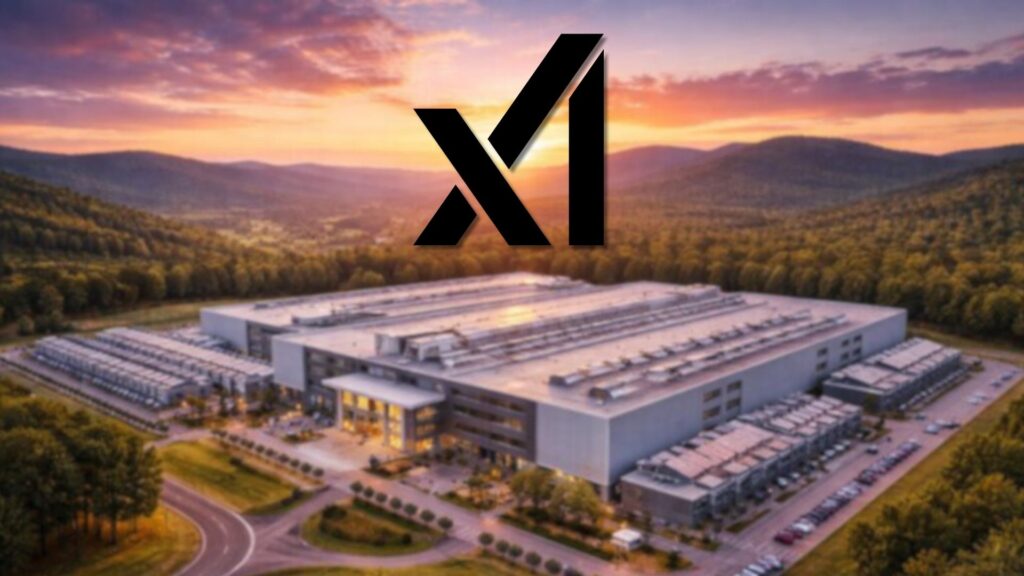
xAI Mississippi Data Center Gas Turbines Explained
AI companies keep talking about bigger models, faster chips, and endless scale. But the harder question is simpler. Where does all that power come from, and who is checking the cost? The reported xAI Mississippi data center setup brings that question into sharp focus. According to TechCrunch, xAI is running nearly 50 gas turbines at its Mississippi site, apparently without full oversight in place. That matters beyond one company. Data centers are turning into private power projects, and local communities can end up dealing with the air quality, noise, and regulatory gaps. If you follow AI infrastructure, energy policy, or the business of large language models, this is one of those stories you should not brush aside. The servers get the headlines. The turbines tell the real story.
What stands out here
- xAI Mississippi data center operations reportedly rely on nearly 50 gas turbines for on-site power.
- The issue is not only energy demand. It is whether that power is being deployed with proper permits and oversight.
- AI infrastructure now has a physical footprint that looks a lot like heavy industry.
- Local impacts, including emissions and noise, can become a direct public concern.
- Expect more fights over how fast AI companies can build versus how fast regulators can respond.
Why the xAI Mississippi data center matters
Look, large AI models need huge amounts of electricity. That part is no longer surprising. Training runs, inference workloads, cooling systems, and networking gear all push power demand up, especially when a company wants speed and does not want to wait years for grid upgrades.
What makes the xAI Mississippi data center notable is the reported use of almost 50 gas turbines on site. That is not a backup generator in a parking lot. It is closer to a small power fleet parked next to an AI operation.
AI data centers are starting to behave less like office buildings and more like industrial plants with their own energy stack.
And that changes the debate. Suddenly, this is not just a tech growth story. It is also a permitting, emissions, and public accountability story.
Why would xAI use gas turbines in Mississippi?
The likely answer is speed. Utilities often cannot deliver new large-scale power capacity on the timeline AI companies want. Grid interconnection can take years. Natural gas turbines can be brought in faster, giving an operator direct control over power supply.
Honestly, this is the same logic you see in emergency construction. If the road is jammed, people build a side entrance. But power is not a harmless shortcut. It comes with emissions, fuel logistics, maintenance, and legal obligations.
There is also a business angle. Delays in compute capacity can cost an AI company dearly, especially if it is racing rivals like OpenAI, Google, Anthropic, or Meta. A company may decide that temporary on-site generation is worth the political and regulatory risk.
That trade-off is becoming non-negotiable for the sector.
What are the oversight concerns?
Based on the TechCrunch report, the central concern is whether these turbines are operating without the expected level of environmental review or permit control. That is a serious issue because gas turbines are not invisible infrastructure. They can emit nitrogen oxides and other pollutants, and the scale matters.
Who signs off on a project like this? That can involve state environmental agencies, local authorities, and sometimes federal rules, depending on capacity, emissions thresholds, and how the equipment is classified. Temporary equipment is often where companies test the edges of regulation (and where regulators can get caught flat-footed).
Here is the practical problem:
- A company needs power fast.
- The grid cannot supply it quickly enough.
- On-site turbines appear to solve the timing issue.
- Permitting frameworks may not be built for AI-scale urgency.
- Communities are left asking questions after the equipment is already running.
That sequence is becoming familiar in tech infrastructure. Build first. Sort out the public process later. I have covered enough expansion booms to know how this goes.
xAI Mississippi data center and the bigger AI power crunch
The xAI Mississippi data center story is a local flashpoint, but the pattern is much bigger. Across the US, data center developers are seeking massive new power deals. Utilities, independent power producers, and regulators are scrambling to keep up.
Electricity demand from data centers has become a serious planning issue. The International Energy Agency and major US utilities have both warned that AI workloads could materially increase power consumption over the next several years. Exact forecasts vary, and some are clearly too rosy. Still, the direction is obvious.
What happens if every major AI player starts treating on-site fossil generation as the quick fix? You get a patchwork of private energy islands, each justified as urgent, each carrying local consequences.
It is a bit like adding extra burners to a crowded restaurant kitchen. Service gets faster for a while. Then the heat, smoke, and strain hit everyone in the room.
What this means for communities and policymakers
Residents near large data center projects often hear promises about jobs, tax revenue, and innovation. Those benefits can be real. But communities also need plain facts about fuel use, air emissions, water demand, noise, and the timeline for permits.
Policymakers should be asking tougher questions now, not later:
- How many turbines are operating on site?
- What permits have been issued, and under what classification?
- How long is the “temporary” generation expected to run?
- What emissions controls are in place?
- What monitoring data will be made public?
That last point matters. Transparency is often where these projects get slippery. If an AI company wants public trust, it should disclose the basics without being dragged into it.
Is this just an xAI problem? No.
Plenty of companies in AI and cloud computing are hitting the same wall. The grid is slow. Demand is exploding. Local review systems were not designed for this pace. So even if xAI becomes the headline case, the structural issue reaches much further.
Amazon, Microsoft, Google, and other hyperscalers all face rising pressure to secure power for data centers. Some are leaning into nuclear, renewables, battery storage, and utility partnerships. Others will be tempted by gas because it is dispatchable and available now. That is the part many press releases try to glide past.
The AI race is no longer just about chips and models. It is about who can secure electricity, permits, and political cover fastest.
What you should watch next
If you are tracking this story, do not focus only on whether the turbines stay online. Watch the paper trail and the precedent.
Signals that matter
- Statements from Mississippi regulators about permit status and enforcement.
- Any emissions data, inspections, or community complaints tied to the site.
- Whether xAI frames the turbines as temporary stopgaps or a longer-term operating model.
- How rival AI companies handle similar power shortages.
- Whether lawmakers push for stricter rules on behind-the-meter generation at data centers.
And watch investor language, too. If companies start treating self-generated fossil power as standard infrastructure, that tells you the AI buildout is running ahead of the public systems meant to manage it.
The question the industry cannot dodge
For years, tech liked to present itself as clean, abstract, and weightless. Software in the cloud. Intelligence at scale. Nice slogans. The xAI Mississippi data center story cuts through that gloss. AI runs on land, steel, fuel, water, wires, and permits.
Here is my read. This will not be the last fight over data center power. It may be the start of a louder one, where the public asks whether the rush to build AI is outrunning the rules that keep industrial projects in check. If nearly 50 gas turbines can appear beside a flagship AI site, what else is being normalized while everyone watches the benchmark scores?