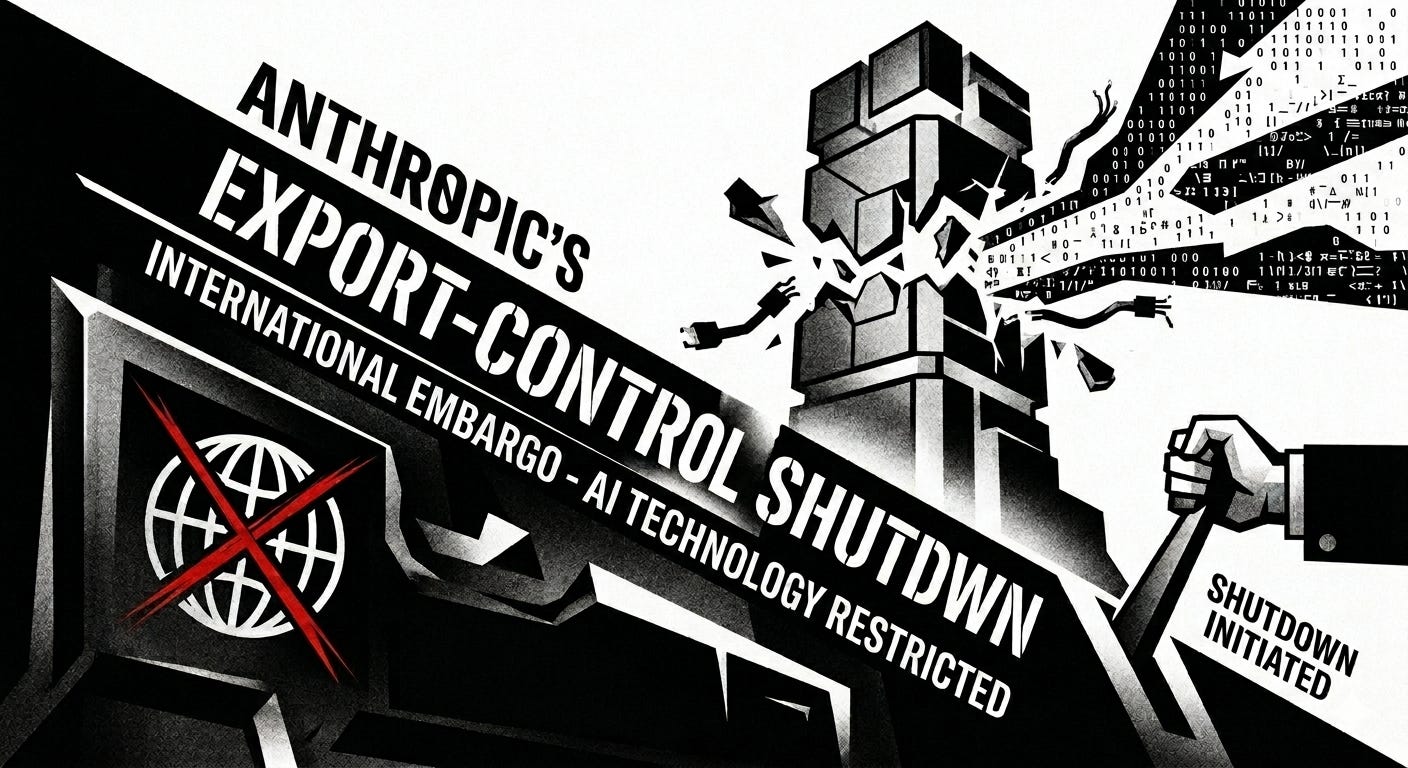
Anthropic’s Shutdown Export Controls Plan: What It Means
Anthropic’s shutdown export controls pitch lands in a tense moment for AI policy. Companies are racing to build bigger models, governments are trying to limit chip smuggling, and the hardware supply chain is already under stress. If you are trying to make sense of the debate, the core issue is simple: who should control access to the chips that power frontier AI, and how much oversight is enough?
The phrase Anthropic shutdown export controls sounds technical, but the policy question is blunt. Should advanced AI chips face tighter export rules if regulators think they could be diverted, stockpiled, or used by actors outside U.S. policy goals? That matters because chip controls are no longer a niche trade issue. They are now part of AI strategy, national security, and industrial competition all at once.
Look, this is not a clean debate. The idea could reduce some misuse. It could also slow legitimate research and push buyers toward gray markets. Which outcome matters more?
What stands out in Anthropic shutdown export controls
- It shifts the focus from model safety to hardware control. That is a much harder policy lever to pull.
- It puts chip exports at the center of AI governance. Semiconductors are the choke point.
- It raises enforcement questions. Rules mean little without customs, licensing, and tracking.
- It could reshape who gets frontier compute. That affects startups, labs, and governments.
Why Anthropic is pressing the issue
Anthropic has taken a fairly hawkish line on AI risk for years. This fits that posture. If advanced models become more capable, then the hardware behind them becomes a security concern, not just a procurement decision.
There is a practical reason for that stance. Chips are easier to count than model behavior, and export controls are easier to write than perfect safety standards. But that does not make them elegant. It makes them available.
“Hardware controls are tempting because they are tangible. But tangible is not the same as precise.”
The company’s argument appears to be that if governments can slow the spread of the most powerful chips, they can reduce the chance of dangerous systems being built or concentrated in the wrong hands. That is the theory. The execution is where things get messy.
How Anthropic shutdown export controls would work in practice
At a high level, shutdown export controls would mean tighter restrictions on the sale, transfer, or shipment of advanced AI chips to certain destinations or entities. In practice, that could involve licensing rules, destination screening, end-user checks, and penalties for diversion.
Think of it like airport security for compute. A ticket does not guarantee you get on the plane if your documents are wrong. The same idea applies here, except the cargo is GPUs and the stakes are national.
The main enforcement problems
- Transshipment: Chips can move through third countries before reaching the final buyer.
- Cloud access: Buyers can rent compute instead of importing hardware directly.
- Resale markets: Secondhand hardware can bypass the original intent of the rule.
- Verification: Governments have limited visibility into what a buyer is actually building.
And that is before you get to foreign policy. If U.S. rules are too strict, other countries may accelerate domestic chip programs. Some will treat the controls as a challenge to route around. Others will see them as a signal to build independent supply chains faster.
What critics are likely to say
The strongest criticism is that export controls often move slower than the market they are trying to manage. By the time a rule is drafted, the hardware landscape may already have changed. That is especially true in AI, where buyers can shift from direct ownership to cloud rentals almost overnight.
Critics will also argue that broad controls can hurt allied researchers and smaller firms more than they hurt bad actors. Big firms can absorb compliance costs. Small ones cannot. That is a real risk, and policy makers should stop pretending otherwise.
There is also a strategic cost. If the U.S. tightens access too much, it may encourage other nations to invest more aggressively in their own chip stacks. That is not hypothetical. It is basic incentives.
Why this matters for the AI market
Compute access shapes the AI market the way stadium size shapes a season. If you can pack more talent into the arena, you get a different kind of game. If access gets capped, the field narrows and the biggest players gain even more leverage.
That is why the policy debate is bigger than one company. Frontier labs, cloud providers, chip designers, and governments all depend on the same hardware pipeline. Tighten it, and you change who can compete.
The likely short-term effect is uncertainty. Buyers may pause deals. Suppliers may add compliance checks. Lobbyists will get busy. Everyone will try to guess where the line will land.
What to watch next
If you are tracking Anthropic shutdown export controls, watch three things.
- Whether U.S. officials treat the idea as a serious policy template or just another industry ask.
- Whether allies align with the same restrictions or resist them.
- Whether chipmakers warn that new rules will slow legitimate AI deployment.
The real test is not whether export controls sound tough. It is whether they can reduce risk without freezing the supply chain into place. That balance is hard, and the people writing the rules know it.
Where this debate goes next
Anthropic is pushing on a pressure point that policy makers cannot ignore. Advanced chips are the fuel for frontier AI, and fuel controls are always political. The question now is whether governments want narrow guardrails or broad gatekeeping.
Honestly, this fight is just getting started. If chip access becomes the main battleground, who gets to decide which AI systems are built first?