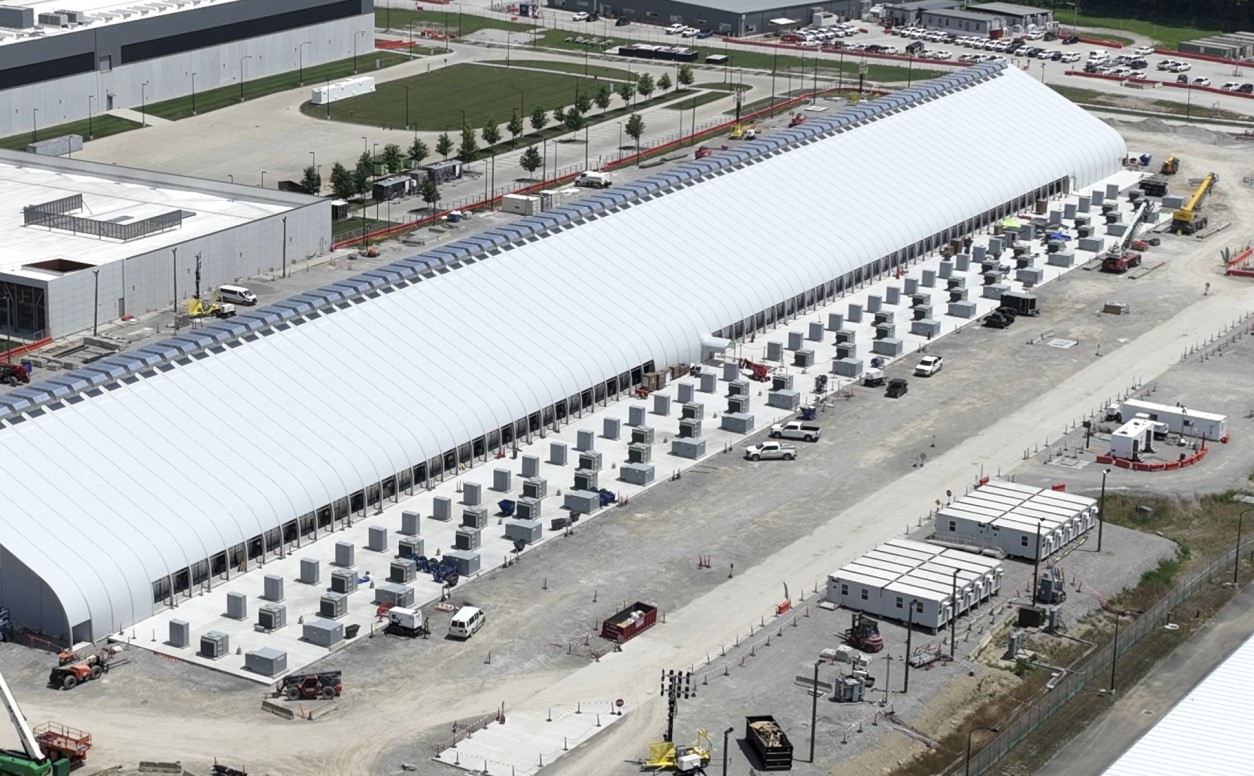
Meta Data Centers in Tents: Fast Capacity, Real Risks
You are watching AI companies race for compute, and the bottleneck is no longer just chips. It is power, land, cooling, and how fast new facilities can go live. That is why the Meta data centers in tents story matters right now. If Meta is willing to use temporary tent structures to speed deployment, it tells you how intense the infrastructure crunch has become.
For anyone tracking AI spending, cloud capacity, or the economics behind large language models, this is more than a quirky construction choice. It is a signal. Meta appears willing to trade polish for speed, much like Tesla did when it built production lines under large tents to move faster. Smart move, or a rushed patch? The answer depends on what problem you think Meta is actually solving.
What stands out here
- Meta data centers in tents points to a severe capacity squeeze tied to AI demand.
- Tent-style builds can cut time to deployment, but they raise questions about durability, cooling, and long-term efficiency.
- The Tesla comparison fits because both companies used temporary structures as a speed-first tactic.
- This move says as much about the AI infrastructure market as it does about Meta itself.
Why Meta data centers in tents is getting attention
Look, data centers are usually built like fortresses. They are expensive, slow, and packed with tightly controlled systems for power delivery, thermal management, networking, and physical security. So when a company as large as Meta uses tent-like structures, people notice.
The reason is simple. Time has become non-negotiable. Meta is spending heavily on AI infrastructure to train models and serve AI products across Facebook, Instagram, WhatsApp, and its research stack. If demand for compute arrives faster than permanent buildings can be completed, a temporary structure can act like a pressure valve.
That is the real story.
And it is not hard to see the logic. A tent-based build can help teams install gear, stage systems, or bring portions of a facility online while more permanent sections are still underway. In construction terms, it is like opening one lane of a highway before the full project is finished. Imperfect, yes. But traffic moves.
What problem Meta is trying to solve
At a basic level, Meta needs more AI compute. Training frontier models and running inference at scale requires huge clusters of GPUs, high-bandwidth networking, and steady power. Those systems cannot sit around waiting for an ideal building schedule.
Here is the likely calculation:
- AI demand is rising fast across internal products and research.
- Traditional data center construction takes too long.
- Delayed capacity can cost more than a temporary infrastructure compromise.
Honestly, that is a rational bet if the temporary setup is handled with discipline. But only if.
Using tents for serious industrial work sounds odd until speed becomes the dominant metric. Then odd starts to look practical.
The Tesla playbook, and why it matters
TechCrunch framed this as Meta borrowing a tactic from Tesla, and that comparison lands. Tesla famously used large tent structures during production crunches to add manufacturing capacity quickly. The message was clear then, and it is clear now. A company under pressure will choose speed over aesthetic neatness.
But there is a difference worth noting. Car assembly and AI data center operations are not the same beast. Manufacturing lines can be awkwardly housed and still function if process controls hold. Data centers face a harsher set of constraints, especially around heat, uptime, airflow, and equipment protection.
So yes, the Tesla analogy works culturally. It shows a founder-style bias toward action. Operationally, though, Meta has less room for sloppiness.
Where tent-style data centers make sense
If you strip away the novelty, temporary structures can help in a few practical cases:
- Staging capacity fast while permanent facilities are still under construction.
- Housing support equipment or non-final deployments during a ramp-up period.
- Testing layouts and workflows before locking in expensive permanent designs.
- Bridging supply chain delays when hardware arrives before the full site is ready.
That last point matters more than most people think. In AI infrastructure, the sequence often breaks. GPUs arrive late. Switches arrive early. Power gear gets delayed. Permitting drags. Temporary structures can buy flexibility when the timeline gets messy.
The hard limits of Meta data centers in tents
Now for the part that hype tends to skip. Temporary builds come with tradeoffs, and some are severe.
Cooling and airflow
High-density AI clusters run hot. Very hot. Modern GPU deployments can demand sophisticated liquid cooling or tightly managed air systems. A tent structure may work for some configurations, but it is not the obvious home for top-tier dense compute unless the surrounding engineering is strong.
Weather and physical resilience
Permanent data centers are built for environmental control and risk reduction. Temporary structures can be more exposed to wind, heat swings, moisture, dust, and maintenance complexity. That does not make them unusable. It does narrow the margin for error.
Security and compliance
Meta has the resources to secure almost anything, but temporary sites can create extra burden around access control, monitoring, and operational policy. For some workloads, that friction may be manageable. For others, it becomes a headache.
Energy efficiency
Data center economics are brutal. Small inefficiencies get expensive fast at scale. If a temporary setup leads to weaker thermal performance or power overhead, the company may accept that cost in exchange for faster deployment. But it is still a cost.
Would you build your forever home out of scaffolding just because the kitchen was late? Of course not. You do it only if the short-term pressure is intense enough.
What this says about the AI infrastructure market
The bigger lesson is not about tents. It is about scarcity.
AI companies are pushing into a market where chips, power, transmission access, data center shells, and specialized construction capacity are all under strain. Nvidia GPUs grab the headlines, but physical infrastructure is becoming just as strategic. Maybe more so.
That puts Meta in the same broad race as Microsoft, Google, Amazon, OpenAI partners, and xAI. Everyone wants more compute. Few can get it as fast as they want. When a company of Meta’s scale improvises on buildings, you are seeing the crunch in plain view.
And that should shape how you read AI spending announcements. Bigger capex numbers do not instantly turn into working capacity. Real-world deployment is messy, physical, and slow.
How to read Meta’s move without overreacting
If you work in AI, cloud, or enterprise tech, there are three sensible takeaways here:
- Expect more temporary infrastructure tactics. Fast deployment is now a competitive weapon.
- Watch power and facility timelines, not just GPU orders. Those are now leading indicators.
- Do not confuse a stopgap with a strategy. Tent structures may solve timing problems, but they are unlikely to define the long-term model.
Here is the thing. Smart operators use temporary fixes all the time. The trick is knowing whether the fix is a bridge or a symptom. If Meta uses tents to accelerate an otherwise solid infrastructure plan, fine. If temporary becomes normal because permanent capacity keeps slipping, that is a different story.
What comes next for Meta data centers in tents
My read is straightforward. This is a speed move, not a design philosophy. Meta wants compute online fast, and a temporary structure can help it close the gap while the heavier infrastructure catches up. That is defensible. It is also a little revealing.
For all the chatter about software magic, AI still runs on concrete, steel, cables, chillers, and megawatts. The companies that win will not just build better models. They will build capacity faster, cheaper, and with fewer self-inflicted bottlenecks. The next question is whether Meta’s tent tactic stays a one-off workaround, or becomes a sign that the whole industry is building under pressure.