Cisco’s AI Data Center Strategy Shifts Into High Gear
AI workloads are stretching power grids, real estate, and supply chains, and Cisco AI data center strategy now sits at the center of that crunch. Cisco CEO Chuck Robbins says customers want compute now, not promises, while hyperscalers and enterprises fight for GPUs and network gear. That urgency explains why Cisco is betting on modular builds, tighter supply deals, and partnerships that reach from space networking to enterprise edge. The question is simple: can a legacy networking giant move fast enough to feed the AI boom without losing margin and trust?
What matters right now
- Scarce GPUs and optics are pushing Cisco to lock in supply and streamline designs.
- Enterprises want AI-ready fabrics without ripping out existing Cisco gear.
- Power and cooling constraints drive modular, smaller-footprint builds.
- Space networking and low-earth orbit links emerge as backup paths for data-hungry apps.
- Software control remains Cisco’s lever to keep customers inside its ecosystem.
Cisco AI data center strategy playbook
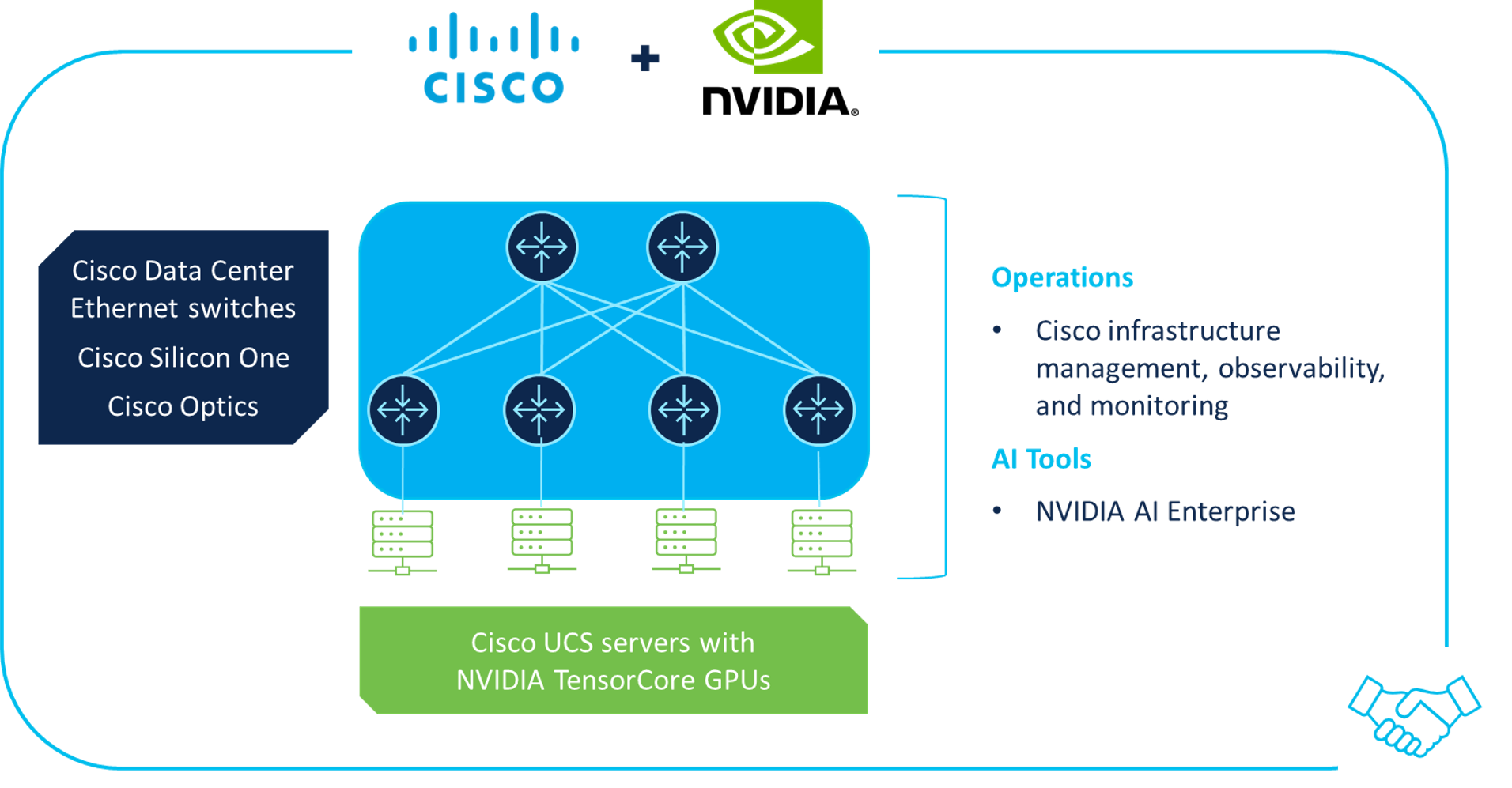
Robbins frames the game as speed and predictability. Cisco is promising reference architectures that pair Ethernet fabrics with partner compute so customers can deploy in weeks, not quarters. Think of it like a sports team shortening the playbook to run faster drives: fewer exotic calls, more reliable gains. The company is also leaning on its supply leverage to secure optics and switches, which have quietly become the new kingmakers of AI clusters.
“People need capacity now. Our job is to remove friction between design and delivery,” Robbins told The Verge.
This single sentence sums up the pivot.
Power is the other chokepoint. Cisco is pushing smaller, modular builds that can slot into existing racks, then scale out. That lowers the upfront power draw and buys time while utilities catch up. It is a pragmatic move that matches how many enterprises deploy new workloads: start small, prove value, expand.
How Cisco AI data center strategy affects customers
Customers do not want forklift upgrades. Cisco’s pitch is to drop AI-ready fabrics alongside current networks, then use software overlays for traffic engineering. It mirrors renovating a kitchen while still cooking dinner. That matters for regulated industries that cannot suffer downtime but still need GPU clusters for models and retrieval systems.
Supply transparency is another sticking point. Robbins says Cisco now shares lead-time forecasts more openly, a nod to CIOs burned by past shortages. And who wants to bet their AI roadmap on opaque delivery dates?
Practical steps for buyers
- Map current rack power and cooling limits before ordering GPUs.
- Ask Cisco for lead-time windows on optics and switches, not just servers.
- Pilot Ethernet-based AI clusters to validate latency and throughput on your workloads.
- Use software-defined segmentation to isolate AI traffic without touching legacy apps.
Space links and edge: beyond the four walls
Cisco’s work on space networking sounds flashy, but Robbins casts it as resilience. Low-earth orbit links can serve as overflow paths for remote sites or disaster scenarios. It is like adding a backdoor to the stadium in case the main gates jam. The company pairs that with edge gear for industrial sites, aiming to keep inference close to data when backhaul is shaky.
(Expect more telco tie-ups here.) If these partnerships deliver, enterprises could route bursts of AI traffic without waiting on fiber builds.
Risk check and reality
Cisco still faces classic risks: supply shocks, rivals pushing cheaper white-box switches, and the cultural shift from hardware margins to software-heavy models. The Ethernet-versus-InfiniBand debate will stay noisy, and customers will test claims on real-world latency.
Another open question: can Cisco maintain simplicity while upselling management software and security? Layering too many tools could slow the very deployments it wants to accelerate.
Where Cisco bets next
Robbins hints at tighter ecosystem plays, more transparent supply dashboards, and services to help customers model power draw before they buy. If Cisco keeps execution tight, it can turn its vast installed base into an AI-ready network without ripping and replacing. If not, buyers will look elsewhere fast.
Which way will your next data center build lean?